Why Every Yoga Teacher Must First Be a Sādhaka
Certification and advanced postures are not what define a yoga teacher. On Sādhana, authentic teaching, and why the best teachers remain lifelong practitioners.
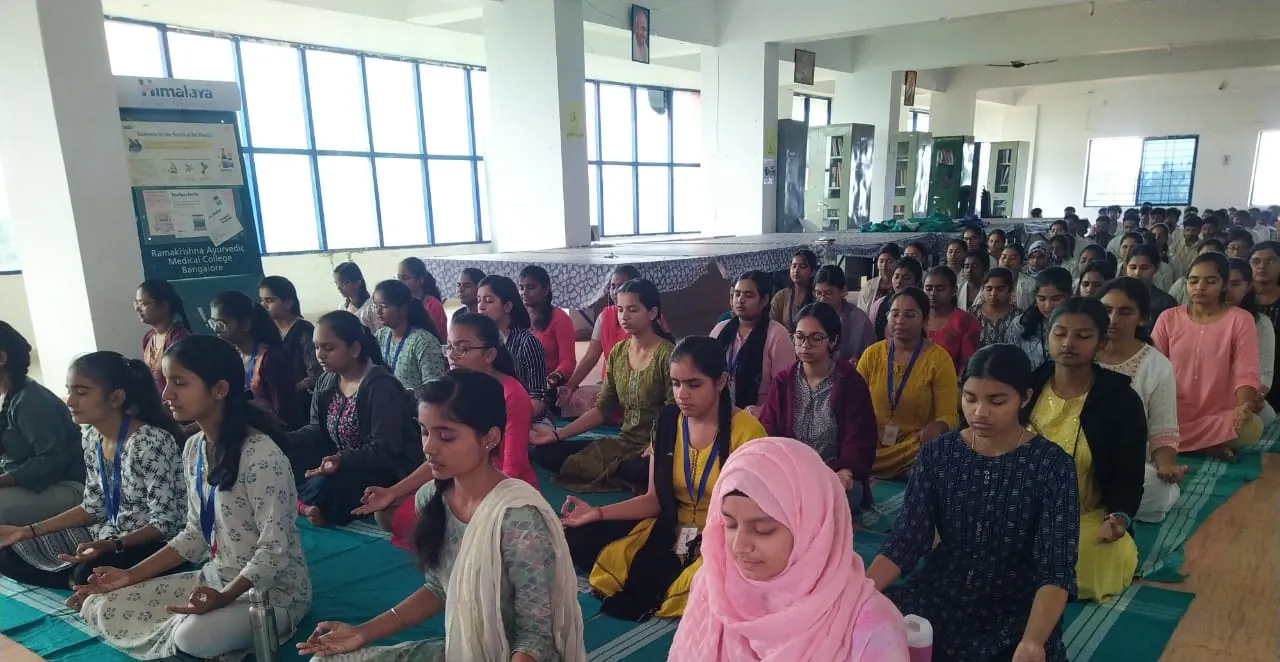 Ramakrishna Ayurvedic Medical College: Meditation Session
In recent years, yoga has experienced remarkable global growth. Studios are expanding, teacher training programs are multiplying, and social media platforms are filled with impressive demonstrations of yoga postures. While this growth has helped bring yoga to millions of people, it also raises an important question:
What truly defines a yoga teacher?
Is it certification? Is it the ability to perform complex postures? Or is it something deeper?
In the traditional yogic understanding, a true yoga teacher is first and foremost a Sādhaka.
Understanding the Meaning of a Sādhaka
The word Sādhaka comes from the Sanskrit term Sādhana, which means a dedicated spiritual practice undertaken with discipline, sincerity, and perseverance.
A Sādhaka is not merely someone who practices yoga occasionally. Rather, a Sādhaka is someone who commits to an ongoing journey of self-transformation, inner awareness, and personal growth.
For a yoga teacher, this inner journey is essential. Teaching yoga without personal Sādhana is like guiding others along a path that one has never walked.
In the classical yoga tradition, knowledge was never considered complete unless it was experienced and embodied.
The Foundation of Authentic Teaching
When a yoga teacher maintains a sincere personal practice, their teaching naturally reflects authenticity.
Students can sense when a teacher is sharing from direct experience rather than theoretical understanding. The quality of guidance changes significantly when it emerges from lived practice.
A teacher who is a Sādhaka often brings several important qualities into the learning space:
Depth of understanding developed through consistent practice
Empathy and patience gained from personal challenges on the path
Authenticity and sincerity that students can feel
Inner calm and stability cultivated through meditation and breath awareness
These qualities cannot be obtained simply through training programs or academic study. They develop gradually through consistent and sincere Sādhana.
Sādhana Beyond Physical Practice
In modern yoga culture, the focus often remains heavily on physical postures. While Āsana practice is an important component of yoga, traditional Sādhana includes a broader range of practices that support holistic development.
A yoga teacher’s Sādhana may include:
Āsana (Postures) Building strength, flexibility, and bodily awareness.
Prāṇāyāma (Breath Regulation) Balancing the nervous system and cultivating energy awareness.
Dhyāna (Meditation) Developing mental clarity, focus, and inner stillness.
Svādhyāya (Self-Study) Reflecting on one’s thoughts, behaviors, and understanding of yogic teachings.
Tapas (Discipline) Maintaining commitment to practice even when it is challenging.
Through these practices, the teacher’s understanding of yoga gradually deepens, extending far beyond physical movement into mental, emotional, and spiritual dimensions.
Teaching as a Transmission of Experience
In traditional yoga lineages, teaching was often described as a transmission of experience rather than merely the sharing of techniques.
When a teacher has deeply engaged in Sādhana, their presence itself becomes supportive for students. Their calmness, clarity, and groundedness create a learning environment that encourages trust and transformation.
This is why many respected yoga teachers throughout history were known not for the number of classes they taught but for the depth of their personal practice.
The Responsibility of a Yoga Teacher
Teaching yoga carries a certain responsibility. Students often approach yoga not only for physical fitness but also for stress relief, emotional balance, and personal growth.
A teacher who maintains their own Sādhana is better equipped to guide students responsibly because they continue to evolve on the same path.
Rather than presenting themselves as experts who have reached the destination, they remain humble practitioners who are continuously learning.
The Teacher Who Remains a Student
Perhaps one of the most beautiful aspects of the yogic path is that it has no final endpoint. The journey of awareness, self-discovery, and inner refinement continues throughout life.
A yoga teacher who remains a Sādhaka understands this deeply. They do not stop practicing once they begin teaching. Instead, teaching becomes another expression of their ongoing practice.
In this way, the teacher continues to grow alongside their students.
Conclusion
As yoga continues to expand globally, the role of the yoga teacher is becoming increasingly significant. Certifications and training programs are valuable tools, but they cannot replace the depth that arises from sincere and consistent practice.
Ultimately, the authenticity of a yoga teacher is reflected not only in their knowledge but in their dedication to Sādhana.
Because in yoga, the most inspiring teachers are not those who simply instruct others — they are those who live the practice every day.
And in the truest sense, the best yoga teachers remain lifelong Sādhakas.